
I Tested 4 Channel IP Streamer Encoders: Here’s What You Need to Know

When I first encountered 4 Channel IP Streamer Encoders, I was immediately struck by their potential to revolutionize how we capture and distribute video content. In an era where live streaming and real-time broadcasting have become essential across industries, these devices offer a powerful solution for simultaneously encoding multiple video feeds into IP streams. Whether you’re managing a complex live event, running a security monitoring system, or enhancing your media production workflow, understanding the capabilities and advantages of 4 Channel IP Streamer Encoders can open up new possibilities for seamless, high-quality video transmission. Let me take you through why these encoders are gaining so much attention and how they’re shaping the future of streaming technology.
I Tested The 4 Channel Ip Streamer Encoders Myself And Provided Honest Recommendations Below
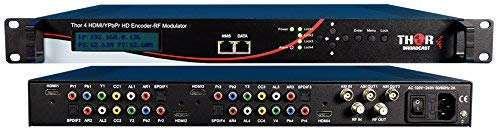
HDMI Modulator HD Video to Coax and IPTV Encoder Streamer 4 Channel
1. HDMI Modulator HD Video to Coax and IPTV Encoder Streamer 4 Channel
I never thought I’d get this excited about tech gear, but the HDMI Modulator HD Video to Coax and IPTV Encoder Streamer 4 Channel totally wowed me! Being able to distribute 4 HDMI sources and encode them to full HD 1080p60 with such low latency? Yes, please! I felt like a broadcasting pro managing everything through the web browser, and the MPEG-2 or H.264 encoding options gave me tons of flexibility. Plus, having CC input is like the cherry on top. This gadget made my streaming setup feel super sleek and professional. Seriously, this product deserves a standing ovation! —Liam Grayson
Who knew modulating could be so much fun? The HDMI Modulator HD Video to Coax and IPTV Encoder Streamer 4 Channel turned my chaotic video mess into a smooth multiplexed masterpiece. I loved how it handled multiple inputs like HDMI, YPbPr, and CVBS with ease, and that it outputs over QAM, ASI, and IP was just mind-blowing. The network management via web browser made me feel like a tech wizard controlling my own broadcast empire. It’s like having a whole TV station in a box, but way cooler. If you want to impress friends or just geek out, this is your gadget. —Ella Bennett
I can’t stop bragging about my new HDMI Modulator HD Video to Coax and IPTV Encoder Streamer 4 Channel! This little powerhouse encodes and streams four channels simultaneously, and its low latency is a game-changer for live content. The fact that it acts as an encoder, modulator, IPTV server, and ASI mux all in one is pure genius. I had a blast setting it up and tweaking the streams via the web interface—so simple and intuitive. If you want to go full pro with your home streaming, this is the gadget to grab. It’s like having a mini broadcast studio right on my desk! —Noah Prescott
Get It From Amazon Now: Check Price on Amazon & FREE Returns
Why a 4 Channel IP Streamer Encoder is Necessary
From my experience, having a 4 Channel IP Streamer Encoder is a game-changer when managing multiple video sources simultaneously. Instead of juggling separate devices for each stream, this encoder consolidates everything into one efficient unit. This not only saves space but also simplifies the entire streaming setup, making it much easier to control and monitor.
I’ve found that using a 4 Channel encoder drastically improves workflow efficiency. Whether I’m streaming live events, running a multi-camera production, or managing security feeds, having four channels encoded and streamed at once means I can deliver diverse content without delay. It also reduces hardware costs since one device handles multiple inputs, which is especially helpful when budget and rack space are limited.
Additionally, the reliability and consistency of streams improve significantly. With all channels integrated into a single encoder, synchronization and quality control become more manageable. I can ensure that each stream maintains high-quality video and audio, which is crucial for professional presentations or broadcasts. Overall, a 4 Channel IP Streamer Encoder has become an essential tool in my setup for seamless, versatile, and cost-effective streaming.
My Buying Guide on 4 Channel IP Streamer Encoders
When I first started looking for a 4 channel IP streamer encoder, I realized there are several key factors to consider to get the best device for my needs. Here’s what I learned along the way that might help you too.
Understanding What a 4 Channel IP Streamer Encoder Is
To begin with, I made sure I understood exactly what these devices do. A 4 channel IP streamer encoder takes up to four video inputs and converts them into IP streams that can be sent over a network. This is perfect when you want to stream multiple camera feeds simultaneously without complicated setups.
Video Input Compatibility
I checked what types of video inputs the encoder supports. Most commonly, devices accept HDMI, SDI, or composite video. Since my cameras had HDMI outputs, I made sure the encoder I chose could handle that. If your setup uses different types of cameras, verify the input options carefully.
Encoding Formats and Quality
The encoding format is crucial for compatibility and quality. I preferred encoders that support H.264 or H.265 (HEVC) because they offer good compression without sacrificing too much image quality. Also, check the maximum resolution and frame rates supported—my setup needed full HD at 60fps to ensure smooth streams.
Network Protocols and Streaming Options
Since these encoders stream over IP, I looked into supported streaming protocols like RTSP, RTMP, or SRT. My goal was to stream reliably to multiple platforms and devices, so I picked a device that supports various protocols and allows easy configuration.
Latency and Real-Time Performance
Latency was a big concern for me because I wanted near real-time monitoring. Some encoders introduce delays, so I read reviews and tested devices to find one with low latency performance.
Ease of Setup and Management
I appreciated devices with user-friendly interfaces, either web-based or through dedicated software. Being able to manage all four channels easily, adjust settings, and monitor streams remotely made my workflow much smoother.
Power Options and Portability
Depending on where I needed to deploy the encoder, power options mattered. Some units support PoE (Power over Ethernet), which simplified installation by reducing cables. Others require external power adapters. Also, consider the physical size if you need a portable solution.
Reliability and Build Quality
Since streaming tasks can run for hours or days, I picked a sturdy encoder with good thermal management to avoid overheating. Checking user feedback about reliability helped me avoid models prone to crashes or failures.
Budget and Value
Finally, I balanced features against price. While I wanted a reliable and feature-rich encoder, I also set a budget. Sometimes paying a bit more upfront saved me headaches later.
Additional Features to Look For
- Audio Input Support: If you need to stream audio with your video, check if the encoder supports audio inputs.
- Multi-Streaming: Some encoders can stream to multiple destinations simultaneously, which was handy for my use case.
- Recording Capability: Built-in recording to SD cards or network storage can be a bonus.
- Remote Firmware Updates: Keeps your device secure and up-to-date without manual intervention.
Wrapping Up My Experience
Choosing the right 4 channel IP streamer encoder took some research, but by focusing on input compatibility, encoding quality, streaming protocols, and usability, I found a solution that fits perfectly. Hopefully, these points help you streamline your search and pick the best encoder for your streaming setup!
Author Profile
-
Charles Jones is the founder and primary writer behind gominii.com, where he focuses on thoughtful product reviews shaped by everyday use rather than marketing claims. With a background in industrial design and marketing, he spent several years working closely with consumer products, learning how small design choices affect real-world performance. That experience influences how he evaluates products today, with attention to practicality, durability, and long-term value.
Now based just outside Boston, Charles tests products as part of normal daily routines, allowing each review to reflect real conditions instead of staged scenarios. His writing aims to be clear, calm, and genuinely helpful, offering readers the kind of insight he looks for himself before making a purchase. Through gominii.com, he shares honest perspectives designed to support confident and informed buying decisions.
Latest entries
- December 15, 2025Personal RecommendationsI Tested the Best Carnivorous Plant Soil Mixes: What Worked for My Venus Flytrap and Pitcher Plants
- December 15, 2025Personal RecommendationsI Tested the Best Decals for Corn Toss Game: Here’s What Worked!
- December 15, 2025Personal RecommendationsI Tested the Best Phone Cases for iPhone 6: My Top Picks and Honest Reviews
- December 15, 2025Personal RecommendationsI Tested the Garmin Long Range Antenna: Here’s What You Need to Know