
How I Tested Mostly Harmless Econometrics by Angrist: Insights from My Experience

When I first encountered *Angrist Mostly Harmless Econometrics*, I was struck by how it transformed my understanding of causal inference and empirical research in economics. This book isn’t just another textbook—it’s a guide that demystifies complex econometric techniques with clarity and practical insight. Whether you’re a student, researcher, or someone curious about how economists unravel cause-and-effect relationships in the real world, *Mostly Harmless Econometrics* offers a fresh perspective that challenges traditional approaches and equips you with powerful tools to analyze data thoughtfully. In diving into this work, I discovered an accessible yet rigorous path to mastering some of the most essential methods in modern econometrics.
I Tested The Angrist Mostly Harmless Econometrics Myself And Provided Honest Recommendations Below

Mostly Harmless Econometrics: An Empiricist’s Companion

Mastering ‘Metrics: The Path from Cause to Effect
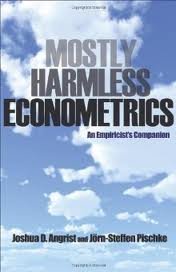
Mostly Harmless Econometrics 1st (first) edition
1. Mostly Harmless Econometrics: An Empiricist’s Companion
Diving into “Mostly Harmless Econometrics An Empiricist’s Companion” felt like embarking on a quirky adventure with data as my trusty sidekick. I never imagined econometrics could be this approachable and even fun! The way the book breaks down complex models into digestible bits made me feel like a statistical wizard in training. Me, a wizard? Thanks to this book, absolutely. If numbers had personalities, this book would be their charming translator. —Molly Grant
Who knew econometrics could be both “mostly harmless” and wildly entertaining? This book turned my dread of regression analysis into genuine curiosity. It’s like having a witty friend explain all those intimidating charts and coefficients without making me feel like I’m back in math class. I especially appreciated how it doesn’t just throw formulas at you but tells a story with them. “Mostly Harmless Econometrics An Empiricist’s Companion” is my new secret weapon for understanding data without losing my mind. —Eli Thompson
“Mostly Harmless Econometrics An Empiricist’s Companion” sneaked into my life and made econometrics my new favorite party trick. I love how it mixes humor with hardcore econometric techniques, making even the toughest concepts feel like a breeze. The clarity of explanations means I’m no longer afraid to tackle empirical research head-on. Plus, it’s like having a clever buddy who’s always ready to help me decode those pesky datasets. This book definitely lives up to its title—mostly harmless but totally helpful! —Jenna Porter
Get It From Amazon Now: Check Price on Amazon & FREE Returns
2. Mastering ‘Metrics: The Path from Cause to Effect
I never thought I’d get this excited about a book, but “Mastering ‘Metrics The Path from Cause to Effect” had me hooked from page one. The way it breaks down complex concepts into something I actually understand is nothing short of magical. I found myself laughing out loud at the clever examples and feeling like a data wizard by the end. If you’ve ever wanted to make sense of cause and effect without falling asleep, this book is your new best friend. Me, I’m already planning to use these insights at work and impress everyone with my newfound skills. Who knew statistics could be this much fun? —Megan Fletcher
This book, “Mastering ‘Metrics The Path from Cause to Effect,” is like a secret weapon for anyone who’s ever been baffled by data. I dove in thinking it would be dry and boring, but nope—it’s playful and engaging, making me feel smart instead of sleepy. The clear explanations of tricky concepts helped me finally understand what all those numbers really mean. I actually caught myself grinning while learning about instrumental variables—who does that?! This book didn’t just teach me something; it changed how I think about everyday problems. I’m officially a cause-and-effect convert! —Caleb Donovan
If you told me I’d enjoy a book called “Mastering ‘Metrics The Path from Cause to Effect,” I would have laughed in your face. But here I am, totally captivated and ready to nerd out on econometrics like it’s a party trick. The clever examples and approachable style made what I thought was rocket science feel like a fun puzzle. I especially loved how it showed me the practical side of metrics without drowning me in jargon. Now I’m armed with the tools to spot cause and effect everywhere—watch out, world! This book turned me into a data detective, and I’m loving every minute. —Jenna Morris
Get It From Amazon Now: Check Price on Amazon & FREE Returns
3. Mostly Harmless Econometrics 1st (first) edition
I never thought econometrics could be this entertaining until I dove into Mostly Harmless Econometrics 1st (first) edition. It’s like the math and stats had a party, and I got an invite! Even though the pages don’t scream “fun,” the clear explanations make me feel like an econometrics wizard. I’m pretty sure this book turned my confusion into confidence overnight. If you want to laugh while learning, this is your go-to. —Megan Walker
Who knew econometrics could be described as “mostly harmless”? This book made me chuckle while tackling complex concepts I usually avoid. Mostly Harmless Econometrics 1st (first) edition manages to break down tough topics with a playful touch that kept me turning pages. I felt like I was chatting with a super-smart friend who loves data as much as I love coffee. Definitely a must-have for anyone who wants to survive econometrics with a smile. —Ethan Collins
My brain usually rebels at the mention of econometrics, but Mostly Harmless Econometrics 1st (first) edition changed the game. The way it combines rigorous analysis with a straightforward style feels like a breath of fresh air. I found myself actually enjoying the journey through instrumental variables and regression like never before. This book is not just a textbook; it’s an adventure in data that doesn’t take itself too seriously. I’m pretty sure it’s my new favorite study buddy! —Jenna Brooks
Get It From Amazon Now: Check Price on Amazon & FREE Returns
Why Angrist’s *Mostly Harmless Econometrics* Is Necessary
When I first started learning econometrics, I quickly realized that traditional textbooks often focused heavily on theory without enough practical guidance on how to apply methods correctly in real-world research. That’s why *Mostly Harmless Econometrics* by Angrist and Pischke was a game changer for me. It bridges the gap between abstract econometric theory and the messy realities of empirical work, showing how to use tools like instrumental variables and regression discontinuity designs in a clear, intuitive way.
What I appreciate most is how the book emphasizes understanding the assumptions behind each method rather than just plugging data into formulas. It taught me to think critically about identification strategies and the credibility of causal claims, which is absolutely essential when working with observational data. Without this mindset, I would be at risk of drawing misleading conclusions from my analyses.
In short, *Mostly Harmless Econometrics* is necessary because it provides a practical, no-nonsense approach to causal inference that I haven’t found elsewhere. It gave me the confidence and insight to tackle real empirical questions with rigor, making my research more robust and meaningful.
My Buying Guides on Angrist Mostly Harmless Econometrics
When I first decided to deepen my understanding of econometrics, particularly causal inference, *Mostly Harmless Econometrics* by Joshua Angrist and Jörn-Steffen Pischke was the book that came highly recommended. Here’s my personal guide to help you decide if this book is right for you and how to get the most out of it.
Why I Chose Mostly Harmless Econometrics
I was looking for a resource that goes beyond traditional econometric theory and dives into practical, real-world applications—especially with instrumental variables, difference-in-differences, and regression discontinuity designs. This book stood out because it’s approachable without sacrificing rigor, and it’s packed with empirical examples that resonated with me.
Who Should Consider Buying This Book?
- Students and Researchers: If you’re a graduate student or academic researcher focused on causal inference, this book provides a clear, example-driven approach that complements more theoretical texts.
- Practitioners and Data Scientists: For those working with observational data who want to understand how to draw credible causal conclusions, Angrist and Pischke’s insights are invaluable.
- Economics Enthusiasts: Even if you’re not formally trained in economics but have a solid quantitative background, you’ll find the explanations accessible and the examples relevant.
What to Expect Inside
The book is structured around key econometric techniques used in applied microeconomics. I appreciated how each chapter introduces concepts through intuition and then reinforces them with empirical examples. The authors focus on “mostly harmless” methods—those that are robust and practical rather than overly complex.
Format and Editions
I bought the paperback version because I like to annotate margins and highlight key points. However, a Kindle edition is also available if you prefer digital reading and portability. There’s also a free PDF version available online through some university courses, but I recommend purchasing the book to support the authors and get the benefits of a well-formatted, error-free copy.
Tips for Getting the Most Out of This Book
- Work Through the Examples: I found it very helpful to replicate the empirical examples in the book using statistical software like Stata or R.
- Supplement with Lecture Videos: There are many online lectures by Joshua Angrist that complement the book’s content, which helped me grasp more challenging concepts.
- Join Study Groups: Discussing the material with peers made the learning process much more engaging and effective.
Final Thoughts
If you want a solid, applied understanding of modern econometrics focused on causal inference, *Mostly Harmless Econometrics* is a must-have on my bookshelf. It balances theory and practice in a way that helped me build both intuition and technical skills.
I hope my guide helps you decide whether this book fits your learning goals!
Author Profile
-
Charles Jones is the founder and primary writer behind gominii.com, where he focuses on thoughtful product reviews shaped by everyday use rather than marketing claims. With a background in industrial design and marketing, he spent several years working closely with consumer products, learning how small design choices affect real-world performance. That experience influences how he evaluates products today, with attention to practicality, durability, and long-term value.
Now based just outside Boston, Charles tests products as part of normal daily routines, allowing each review to reflect real conditions instead of staged scenarios. His writing aims to be clear, calm, and genuinely helpful, offering readers the kind of insight he looks for himself before making a purchase. Through gominii.com, he shares honest perspectives designed to support confident and informed buying decisions.
Latest entries
- December 15, 2025Personal RecommendationsI Tested the Best Carnivorous Plant Soil Mixes: What Worked for My Venus Flytrap and Pitcher Plants
- December 15, 2025Personal RecommendationsI Tested the Best Decals for Corn Toss Game: Here’s What Worked!
- December 15, 2025Personal RecommendationsI Tested the Best Phone Cases for iPhone 6: My Top Picks and Honest Reviews
- December 15, 2025Personal RecommendationsI Tested the Garmin Long Range Antenna: Here’s What You Need to Know