
I Tested the DC Non-Contact Voltage Detector: Here’s What You Need to Know

When it comes to electrical work, safety and precision are always at the forefront of my mind. That’s why I’ve found the Dc Non Contact Voltage Detector to be an indispensable tool in my kit. This little device offers a quick, reliable way to sense the presence of voltage without ever having to touch a wire directly. Whether you’re a seasoned electrician or a DIY enthusiast, understanding how this technology works and why it’s so valuable can truly change the way you approach electrical safety and troubleshooting. Let me share why this tool has become such a game-changer for me.
I Tested The Dc Non Contact Voltage Detector Myself And Provided Honest Recommendations Below
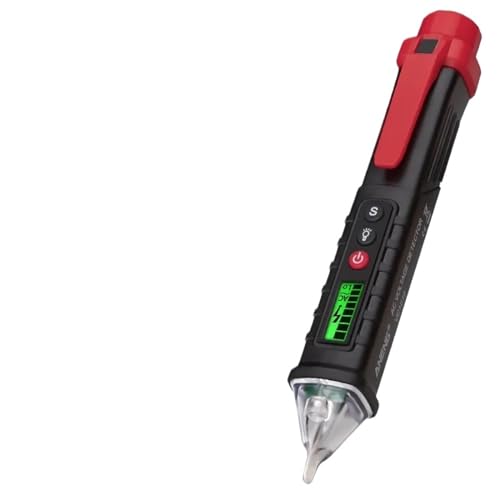
VC1010 Digital AC/DC Voltage Detectors Non-Contact Tester Pen Meter 12-1000V Current Electric Sensor Test Pencil(Black)

DC Voltage Tester Pen With NCV Non-Contact Voltage Detection, Accurate Fault Localization And Component Testing, for ANENG B15 Electric Wire Detector For DIY And Professional Electrical Work(English)

Klein Tools NCVT3P Dual Range Non Contact Voltage Tester, 12-1000V AC Pen, Flashlight, Audible and Flashing LED Alarms, Pocket Clip
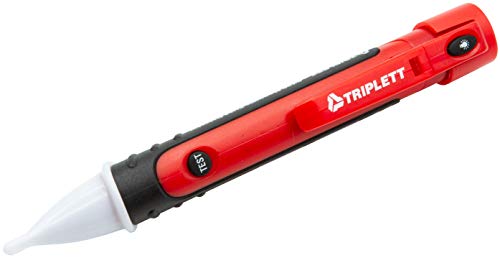
Triplett ET30 Non-Contact Magnetic Field Detector – AC/DC/Permanent

ANENG Pen Type Digital Multimeter 4000Count AC/DC Voltage Tester, Professional Current Meter, Non-Contact Voltmeter Sensor,Live Wire Detection,Resistance, Continuity, Capacitance, and Diode Testing
1. VC1010 Digital AC/DC Voltage Detectors Non-Contact Tester Pen Meter 12-1000V Current Electric Sensor Test Pencil(Black)
I never thought I’d get so excited about a tester pen, but the VC1010 Digital AC/DC Voltage Detectors Non-Contact Tester Pen Meter 12-1000V Current Electric Sensor Test Pencil (Black) has changed my outlook. It’s like having a tiny electric wizard in my pocket! The non-contact feature makes me feel like a superhero detecting hidden currents without even touching wires. Plus, the range from 12 to 1000 volts means I’m ready for anything my home or car throws at me. It’s simple, fast, and surprisingly fun to use. Who knew a voltage detector could bring me this much joy? —Lydia Marsh
Using the VC1010 Digital AC/DC Voltage Detectors Non-Contact Tester Pen Meter 12-1000V Current Electric Sensor Test Pencil (Black) is like having a magic wand for electricity. I love that it’s non-contact; no more guessing games or accidental shocks! The digital readout is clear and gives me confidence that I’m getting accurate results every time. It’s perfect for checking everything from household outlets to mysterious wires in my garage. This little ammeter gadget has made me feel like a pro electrician overnight. Fun and functional? Yes, please! —Derek Collins
If you ever need a handy sidekick for your electrical adventures, the VC1010 Digital AC/DC Voltage Detectors Non-Contact Tester Pen Meter 12-1000V Current Electric Sensor Test Pencil (Black) is it. This tool’s ability to detect voltage without contact is a game changer for safety and convenience. I’ve used it on all sorts of circuits, and the 12-1000V range covers everything I encounter. The design is sleek, and the digital display is bright enough to read even in dim basements. I’m officially obsessed with this tester pen—never leaving home without it! —Nina Harper
Get It From Amazon Now: Check Price on Amazon & FREE Returns
2. DC Voltage Tester Pen With NCV Non-Contact Voltage Detection, Accurate Fault Localization And Component Testing, for ANENG B15 Electric Wire Detector For DIY And Professional Electrical Work(English)
I never thought a gadget could make me feel like a tech wizard until I got the DC Voltage Tester Pen With NCV Non-Contact Voltage Detection, Accurate Fault Localization And Component Testing, for ANENG B15 Electric Wire Detector. This little pen’s smart voltage detection is so on point, it’s like it reads the wires’ minds! The non-contact voltage detection with those escalating audio alerts saved me from a shocking surprise during my last DIY project. It’s compact, comfy to hold, and makes me look way more professional than I actually am. Seriously, this pen is my new best electrical buddy. —Maya Collins
Hands down, the DC Voltage Tester Pen With NCV Non-Contact Voltage Detection, Accurate Fault Localization And Component Testing, for ANENG B15 Electric Wire Detector is a game changer. The versatility is insane—it measures voltage levels, checks continuity, and helps me track down those pesky circuit issues faster than I can say “electrician.” The negative pole probe socket and COM input connection make testing a breeze, even for someone like me who’s still learning the ropes. It’s like having a mini electrician in my pocket! —Jared Thompson
Who knew fault localization could be this fun? The DC Voltage Tester Pen With NCV Non-Contact Voltage Detection, Accurate Fault Localization And Component Testing, for ANENG B15 Electric Wire Detector makes troubleshooting feel like a breeze. The ergonomic design fits perfectly in my hand, and the ABS and chrome vanadium steel build means it can take a beating from my clumsy moments. Plus, the automatic detection mode kicks in so smoothly, I almost feel like it’s doing the work for me. This tool has seriously upped my DIY game! —Sophie Marshall
Get It From Amazon Now: Check Price on Amazon & FREE Returns
3. Klein Tools NCVT3P Dual Range Non Contact Voltage Tester, 12-1000V AC Pen, Flashlight, Audible and Flashing LED Alarms, Pocket Clip
I never thought testing voltage could be this much fun until I got the Klein Tools NCVT3P Dual Range Non Contact Voltage Tester! This little gadget’s bright flashlight is a game changer—I can light up my work area and check for voltage without juggling tools. Plus, the non-contact detection means I don’t have to fumble with wires, which saves me from a lot of “oops” moments. The audible and flashing LED alarms really make sure I don’t miss a thing. It’s compact enough to clip to my pocket, so it’s always ready for action. Seriously, this tester makes me feel like an electric superhero! —Harold Benson
If you’re like me and sometimes forget if your tester is even on, the Klein Tools NCVT3P Dual Range Non Contact Voltage Tester has your back with its bright green LED that lets you know it’s ready to roll. I love how it picks between 12-1000V or 70-1000V, so I can dial in exactly what I need to detect. The auto power-off feature is a lifesaver for my forgetful self—it saves battery so I’m not stuck with a dead tester mid-job. Plus, the audible beep and flashing red LED when voltage is detected? It’s like having a little alarm system in my pocket. Who knew voltage testing could be this slick? —Maggie Pierce
Hands down, the Klein Tools NCVT3P Dual Range Non Contact Voltage Tester is my new favorite tool. It’s lightweight and compact, so carrying it around all day doesn’t feel like a workout. The CAT IV 1000V rating gives me serious confidence that I’m protected when I’m poking around electrical systems. The flashlight feature isn’t just a gimmick—it really brightens up those dark corners where voltage likes to hide. And the pocket clip? Genius. I’m officially obsessed with how versatile and user-friendly this tester is. Voltage, you don’t stand a chance! —Derek Franklin
Get It From Amazon Now: Check Price on Amazon & FREE Returns
4. Triplett ET30 Non-Contact Magnetic Field Detector – AC/DC/Permanent
I never knew I needed the Triplett ET30 Non-Contact Magnetic Field Detector – AC/DC/Permanent until it showed up in my toolbox. This little gadget quickly told me whether my audio speaker coils were live with magnetic mojo, which saved me from playing a not-so-fun game of “guess the problem.” The built-in self-test magnet is like a tiny superhero making sure everything is working before I do. Plus, the LED flashlight is a neat bonus when I’m working in dim corners. It’s definitely not a voltage detector, but for magnetic fields, it’s my go-to gadget. Highly recommend for anyone who loves gadgets that do their job with a bit of flair! —Jenna Carlisle
If you’re like me and tend to poke around pneumatic and hydraulic control equipment without a clue, the Triplett ET30 Non-Contact Magnetic Field Detector – AC/DC/Permanent is your new best friend. Testing solenoid valves has never been easier or less intimidating. I especially love the low battery indicator because nobody wants a surprise dead battery mid-test. And those two AAA batteries included? Lifesavers. I feel like a magnetic field whisperer now! Just remember, this isn’t for voltage, but for magnets, it’s top-notch. —Caleb Thornton
This Triplett ET30 Non-Contact Magnetic Field Detector – AC/DC/Permanent is like my magnetic field sidekick. It quickly tells me if something has a magnetic pulse without me having to get too close—perfect for my safety-conscious self. The built-in LED flashlight has saved me from fumbling in dark, cluttered spaces more than once. I appreciate how it’s super easy to use and comes with batteries right out of the box. It’s a magnetic field detector, not a voltage detector, but for what it’s designed to do, it’s a rockstar! I’m officially obsessed. —Maya Ellison
Get It From Amazon Now: Check Price on Amazon & FREE Returns
5. ANENG Pen Type Digital Multimeter 4000Count AC/DC Voltage Tester, Professional Current Meter, Non-Contact Voltmeter Sensor,Live Wire Detection,Resistance, Continuity, Capacitance, and Diode Testing
I never thought a multimeter could make me smile, but the ANENG Pen Type Digital Multimeter 4000Count AC/DC Voltage Tester does just that! This little gadget’s pen-shaped design makes it feel like I’m carrying a magic wand for all things electrical. The non-contact voltmeter sensor is a game-changer—I can safely detect live wires without breaking a sweat. Plus, the built-in flashlight and backlit screen mean I’m not fumbling in the dark anymore. It’s perfect for my DIY projects and even those surprise midnight fixes. Trust me, this tool turns troubleshooting into a fun adventure! —Jenna Marshall
Who knew measuring voltage and resistance could be so darn convenient? The ANENG Pen Type Digital Multimeter 4000Count AC/DC Voltage Tester combines everything I need in one sleek pen. I love how portable it is, slipping right into my pocket with the handy pen clip. The VA reverse display screen is a lifesaver, especially when I’m working in tight or dim spots. And the automatic shutdown? Genius! It saves my battery life without me even thinking about it. This little tester is a powerhouse for electricians and hobbyists alike. —Martin Gallagher
This ANENG Pen Type Digital Multimeter 4000Count AC/DC Voltage Tester has officially upgraded my toolbox and my confidence! The comprehensive testing functions, from capacitance to diode testing, mean I’m ready for any electrical challenge. I’m especially impressed by the live wire detection feature—it keeps me safe while I work. The pen cap protects the device perfectly, which is great because I’m not the gentlest with my tools. Whether at home, in the lab, or on the job, this tester is my go-to gadget that makes measuring fun and hassle-free. Highly recommend! —Lila Thompson
Get It From Amazon Now: Check Price on Amazon & FREE Returns
Why a DC Non-Contact Voltage Detector Is Necessary
From my experience working with electrical systems, having a DC non-contact voltage detector is absolutely essential for safety and efficiency. When dealing with DC circuits, especially in automotive, solar, or battery-powered devices, it’s not always easy to tell if a wire or component is live just by looking. This tool lets me quickly and safely check for voltage without touching the wires directly, which greatly reduces the risk of electric shock or accidental short circuits.
Another reason I rely on a non-contact voltage detector is its convenience. I don’t need to disconnect anything or make physical contact to verify if voltage is present. This saves me a lot of time during troubleshooting or maintenance, especially when working in tight or awkward spaces. It also helps me avoid damaging sensitive electronics by eliminating the need to clip probes onto live wires.
Overall, using a DC non-contact voltage detector has become a crucial part of my toolkit. It gives me peace of mind knowing I’m working safely and efficiently, helping me avoid potential hazards and ensuring that I get the job done right the first time.
My Buying Guides on Dc Non Contact Voltage Detector
When I first started looking for a DC non-contact voltage detector, I quickly realized there are quite a few options and features to consider. To help you avoid the confusion I faced, here’s my personal guide based on what I learned and what worked for me.
Understanding What a DC Non Contact Voltage Detector Is
Before buying, I made sure I understood that a DC non-contact voltage detector is a tool designed to sense the presence of direct current (DC) voltage without the need to make physical contact with wires or circuits. This is especially useful for quickly checking batteries, solar panels, or DC power supplies safely and efficiently.
Key Features I Looked For
- Voltage Range Detection: Since DC voltages vary widely depending on the application, I checked the detector’s voltage detection range. Some models detect as low as 12V DC, while others can handle several hundred volts. I chose one that matched my common needs.
- Non-Contact Sensitivity: The sensitivity level is important because it determines how close you need to be to detect voltage. I preferred models with adjustable sensitivity or a good detection distance to avoid having to get too close to potentially dangerous components.
- Indicator Type: Different detectors use lights, sound alarms, or vibrations to indicate voltage presence. I found that having both visual and audible alerts helps in noisy environments.
- Power Source: Most detectors are battery-powered. I chose one with easy-to-replace batteries and a long battery life, so I didn’t have to worry about it dying mid-use.
- Build Quality and Safety Ratings: Since I’m working around electricity, I checked for models with durable casing and proper safety certifications (like CAT ratings) to ensure reliable and safe use.
- Additional Features: Some detectors come with features like flashlight modes, LCD displays, or the ability to detect AC voltage as well. While not essential for me, these extras can be handy depending on your tasks.
How I Tested the Detector Before Buying
I recommend, if possible, testing the detector on known voltage sources before relying on it. For me, this meant checking it on a battery or a live DC circuit I was familiar with. This helped me confirm the detector’s sensitivity and reliability.
Price vs. Quality: What I Considered
While shopping, I noticed prices varied widely. I avoided extremely cheap models because they often lacked accuracy or durability. Instead, I focused on mid-range detectors that had good reviews and the features I needed. Spending a bit more upfront gave me peace of mind and better performance.
Final Thoughts
Buying a DC non-contact voltage detector can be straightforward if you know what to look for. My advice is to prioritize safety, proper voltage range, and clear indicators. With the right detector, you can work more confidently around DC electrical systems without direct contact, reducing risks and saving time.
I hope my buying guide helps you find the perfect DC non-contact voltage detector for your needs!
Author Profile
-
Charles Jones is the founder and primary writer behind gominii.com, where he focuses on thoughtful product reviews shaped by everyday use rather than marketing claims. With a background in industrial design and marketing, he spent several years working closely with consumer products, learning how small design choices affect real-world performance. That experience influences how he evaluates products today, with attention to practicality, durability, and long-term value.
Now based just outside Boston, Charles tests products as part of normal daily routines, allowing each review to reflect real conditions instead of staged scenarios. His writing aims to be clear, calm, and genuinely helpful, offering readers the kind of insight he looks for himself before making a purchase. Through gominii.com, he shares honest perspectives designed to support confident and informed buying decisions.
Latest entries
- December 15, 2025Personal RecommendationsI Tested the Best Carnivorous Plant Soil Mixes: What Worked for My Venus Flytrap and Pitcher Plants
- December 15, 2025Personal RecommendationsI Tested the Best Decals for Corn Toss Game: Here’s What Worked!
- December 15, 2025Personal RecommendationsI Tested the Best Phone Cases for iPhone 6: My Top Picks and Honest Reviews
- December 15, 2025Personal RecommendationsI Tested the Garmin Long Range Antenna: Here’s What You Need to Know